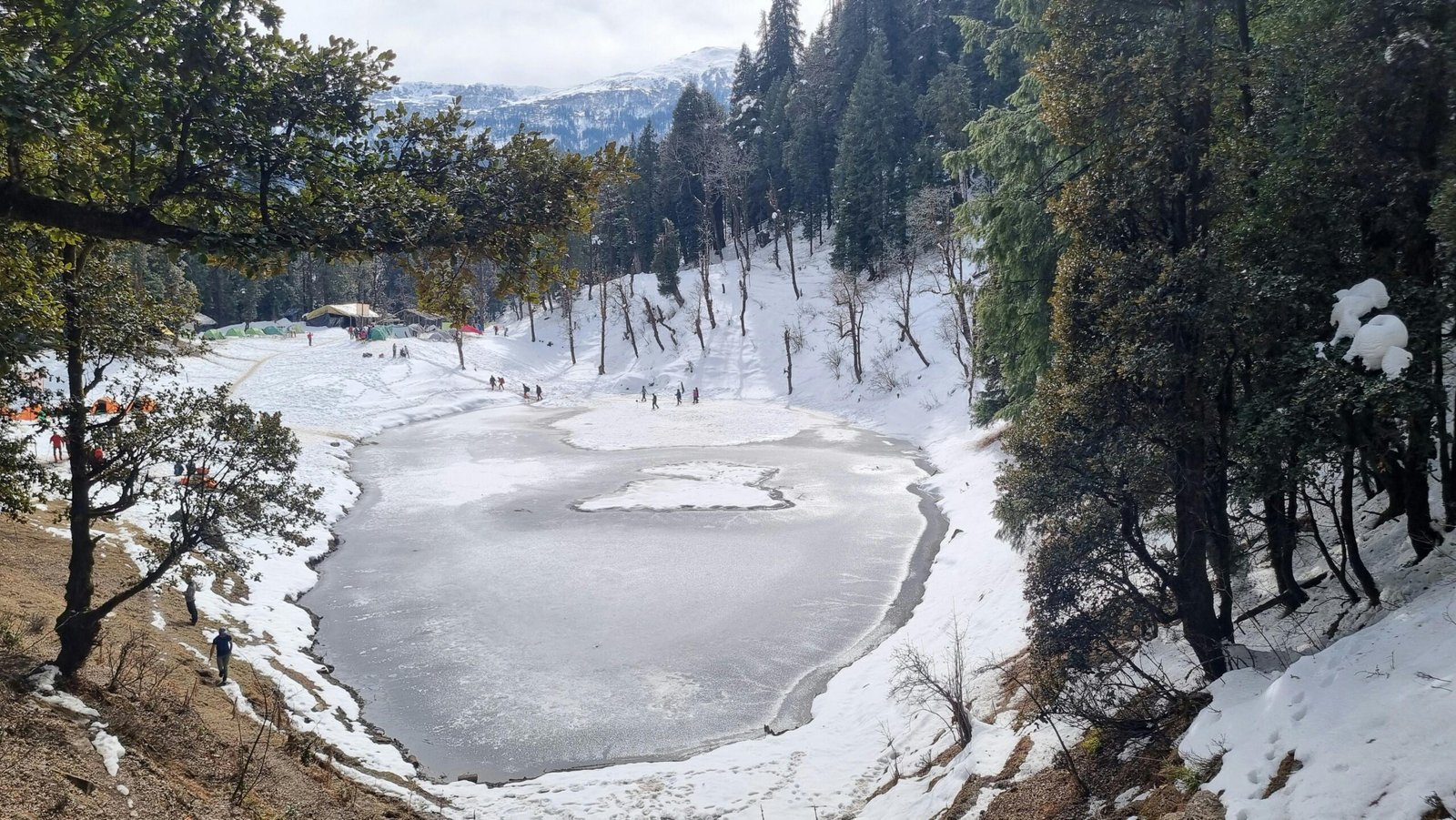

Uttarakhand is often called Devbhoomi, or the Land of Gods, and the Panch Kedar temples are among the most important Shiva pilgrimage sites in the Garhwal Himalayas.
Panch Kedar refers to five sacred temples dedicated to Lord Shiva: Kedarnath, Tungnath, Rudranath, Madhyamaheshwar and Kalpeshwar. These temples are spread across the mountains of Uttarakhand, and each has its own religious importance, landscape and journey.
The pilgrimage is not just about visiting five temples. It combines faith, mythology, mountain trails and the quiet beauty of the Himalayas.
And yes, some of these temples require serious trekking. The Himalayas don’t exactly believe in giving spiritual experiences with a lift and parking lot.
According to the traditional legend associated with the Panch Kedar, the five temples are connected with different parts of Lord Shiva’s body. The legend is closely associated with the Pandavas and their search for Lord Shiva after the Mahabharata war.
What Are the Panch Kedar Temples?
The five Panch Kedar temples in Uttarakhand are:
- Kedarnath Temple – associated with the hump of Lord Shiva
- Tungnath Temple – associated with the arms
- Rudranath Temple – associated with the face
- Madhyamaheshwar Temple – associated with the middle part or navel
- Kalpeshwar Temple – associated with the matted hair or locks
The Shri Badarinath-Kedarnath Temple Committee and Uttarakhand Tourism both recognise these shrines as part of the Panch Kedar tradition.
These temples are located in different parts of the Garhwal Himalayas. So, completing the Panch Kedar Yatra requires more planning than a normal temple trip.
The Story Behind Panch Kedar
The story of Panch Kedar comes from Hindu tradition and is connected with the Pandavas.
According to the traditional account, after the Mahabharata war, the Pandavas wanted to seek Lord Shiva’s blessings for forgiveness and relief from the consequences of the war.
Lord Shiva did not want to appear before them and is said to have taken the form of a bull. The Pandavas eventually recognised him, and when Shiva tried to disappear into the ground, different parts of his body appeared at different places in the Himalayas.
His hump appeared at Kedarnath, his arms at Tungnath, his face at Rudranath, his middle body at Madhyamaheshwar, and his locks or hair at Kalpeshwar.
Together, these five places became known as the Panch Kedar.
This is a religious tradition rather than a historical account, so it is best understood within the context of Hindu mythology and pilgrimage.
1. Kedarnath Temple
Kedarnath Temple is perhaps the best-known temple among the Panch Kedar.
The temple stands in Rudraprayag district beside the Mandakini River at an altitude of around 3,584 metres. It is also one of the 12 Jyotirlingas of Lord Shiva and forms part of Uttarakhand’s Char Dham pilgrimage.
That makes Kedarnath special in two major pilgrimage traditions: it is both a Jyotirlinga and one of the Panch Kedar temples.
The temple’s setting is equally remarkable. High Himalayan peaks surround the valley, creating the kind of landscape that makes even a tired trekker stop for a few seconds.
According to the Panch Kedar tradition, the hump of Lord Shiva is worshipped at Kedarnath.
The temple is reached through the Kedarnath pilgrimage route, with Gaurikund serving as the traditional road-access point for the trek.
The Shri Badarinath-Kedarnath Temple Committee currently provides official information about Kedarnath registration, temple services, accommodation and pilgrimage arrangements.
2. Tungnath Temple
Tungnath Temple is another important Panch Kedar shrine and is located in Rudraprayag district.
At approximately 3,680 metres above sea level, Tungnath is recognised as the highest Shiva temple among the Panch Kedar sites. The Shri Badarinath-Kedarnath Temple Committee also lists Tungnath at this elevation.
The temple can be reached from Chopta, followed by a trekking route of about 3 km according to the temple committee’s information.
Tungnath is particularly popular because the journey combines pilgrimage with mountain trekking.
The traditional Panch Kedar story says that the arms of Lord Shiva appeared here.
The tungnath trek also offers impressive Himalayan views, which is one reason Tungnath attracts both pilgrims and trekkers.
For travellers planning the journey, weather conditions matter a lot. Snow, cold temperatures and trail conditions can affect access, especially outside the main pilgrimage season.
3. Rudranath Temple
Rudranath Temple is considered one of the more remote Panch Kedar shrines.
The temple is associated with the face of Lord Shiva in the traditional Panch Kedar story. Uttarakhand Tourism’s master plan identifies Rudranath as one of the five Panch Kedar temples.
Unlike Kedarnath and Tungnath, Rudranath does not offer the same easy road access. The journey involves trekking through the Himalayan landscape.
That remoteness is part of its appeal.
The surrounding area features mountain landscapes, forests and meadows, giving pilgrims a very different experience from visiting a temple in a busy town.
Rudranath trek is generally considered a demanding pilgrimage because reaching the temple requires a longer mountain journey and careful planning.
If you’re thinking about including Rudranath in your Panch Kedar Yatra, don’t treat it like a casual morning walk. Proper footwear, fitness, weather awareness and local guidance can make a big difference.
4. Madhyamaheshwar Temple
Madhyamaheshwar, also written as Madmaheshwar, is located in Rudraprayag district and is another major Panch Kedar shrine.
Uttarakhand Tourism describes Madhyamaheshwar as one of the Panch Kedar sites and a popular destination for trekkers. The temple sits in a Himalayan setting with views towards peaks including Chaukhamba, Neelkanth and Kedarnath.
According to the traditional legend, the middle part of Lord Shiva’s body appeared here. The name itself reflects this association, with “madhya” referring to the middle.
The journey to Madhyamaheshwar is an important part of the experience.
Uttarakhand Tourism describes the approach as a 24-km trek, making it a destination where preparation matters.
Near the main temple is Budha Madhyamaheshwar, from where visitors can enjoy views of several Himalayan peaks.
For travellers who enjoy combining spirituality with mountain scenery, Madhyamaheshwar can be one of the most rewarding sections of the Panch Kedar pilgrimage.
5. Kalpeshwar Temple
Kalpeshwar Temple is the fifth shrine of the Panch Kedar.
It is located in the Urgam Valley of Chamoli district and is associated with the matted hair or locks of Lord Shiva in the traditional Panch Kedar story.
Kalpeshwar is different from several other Panch Kedar temples because it can be accessed more easily compared with the longer trekking approaches of some of the other shrines.
The temple sits amid forests and mountain landscapes in the Urgam Valley.
Uttarakhand Tourism’s official material identifies Kalpeshwar as one of the Panch Kedar temples and notes its location in the Urgam Valley.
The peaceful surroundings make the temple particularly appealing to travellers looking for a quieter Himalayan pilgrimage.
And while the journey may be less demanding than some other Panch Kedar routes, mountain travel still requires attention to weather and road conditions.
Panch Kedar Temples at a Glance
| Temple | Traditional association | District/Region |
|---|---|---|
| Kedarnath | Hump of Lord Shiva | Rudraprayag |
| Tungnath | Arms of Lord Shiva | Rudraprayag |
| Rudranath | Face of Lord Shiva | Chamoli |
| Madhyamaheshwar | Middle body/navel | Rudraprayag |
| Kalpeshwar | Hair/locks of Lord Shiva | Chamoli |
The body-part associations come from the traditional Panch Kedar legend documented by the Shri Badarinath-Kedarnath Temple Committee.
How Difficult Is the Panch Kedar Yatra?
The difficulty depends on which temple you are visiting. Kedarnath has a well established pilgrimage route and receives a very large number of pilgrims. Tungnath has a comparatively shorter approach from Chopta.
Rudranath and Madmaheshwar require more trekking and demand better preparation. Kalpeshwar is comparatively easier to access than the other remote Panch kedar Shrines.
But don’t judge the whole journey only by distance. Altitude, weather, steep section, trail conditions and your own fitness can change the experience completely
Someone who comfortably walks 10 km on city roads may discover that mountain walking has a different personality.
Best Time to Visit Panch Kedar Temples
There isn’t one single travel window that works equally well for every Panch Kedar temple.
These temples are located at different elevations and have different access conditions.
The main pilgrimage season generally falls during the warmer months when the Himalayan routes become accessible.
For example, Himalayan Dream Treks lists summer and Autumn is the best time to do this treks.
Weather can change quickly in the mountains, so travellers should check the latest official updates before starting their journey.
Winter access can become difficult because of snow and harsh weather at higher elevations.
And monsoon travel needs extra caution because heavy rainfall can affect roads and trekking routes.
Is Panch Kedar Yatra the Same as Char Dham Yatra?
No.
This is an important distinction for travellers planning a pilgrimage in Uttarakhand.
Char Dham Yatra in Uttarakhand includes Kedarnath, Badrinath, Gangotri and Yamunotri.
Panch Kedar Yatra focuses on the five Shiva temples: Kedarnath, Tungnath, Rudranath, Madhyamaheshwar and Kalpeshwar.
Kedarnath belongs to both pilgrimage traditions, which is why people sometimes mix them up. Uttarakhand Tourism separately identifies the Char Dham and Panch Kedar circuits.
Tips for Planning a Panch Kedar Yatra
Before starting the journey, check the latest temple opening dates and route conditions.
Carry proper trekking shoes, warm clothing, rain protection and basic personal essentials.
Don’t underestimate altitude. Give your body enough time to adjust, especially when moving from lower areas to high-altitude locations.
Keep your travel plan flexible. Mountain weather doesn’t always care about your hotel booking.
For official pilgrimage information, registration requirements and updates, use the Uttarakhand government’s Tourist Care portal and the Shri Badarinath-Kedarnath Temple Committee website.
If you’re travelling with a group or through a tour operator, confirm what is included in the package, especially transport, accommodation, meals, permits, trekking support and local assistance.
Why Visit the Panch Kedar Temples?
The Panch Kedar temples offer something different from a normal sightseeing trip.
There is the religious importance, of course.
But there is also the journey itself.
You walk through forests, villages, meadows and high Himalayan landscapes. Some routes test your legs. Others test your patience. All of them give you time away from the noise of everyday life.
For devotees, the five temples represent different manifestations of Lord Shiva.
For trekkers, they provide an opportunity to explore some of Garhwal’s remarkable mountain landscapes.
And for travellers who want both, Panch Kedar brings the two experiences together.
Final Thoughts
The Panch Kedar temples in Uttarakhand represent one of the most distinctive Shiva pilgrimage traditions in the Himalayas.
Kedarnath, Tungnath, Rudranath, Madhyamaheshwar and Kalpeshwar each have their own identity, route and setting. Together, they form a pilgrimage circuit deeply connected with Hindu tradition and the landscape of Garhwal.
The Panch Kedar Yatra isn’t necessarily about reaching five destinations as quickly as possible.
It’s about the journey between them.
The mountain roads, long walks, quiet valleys and ancient shrines all become part of the experience.
So, if you’re planning to visit the Panch Kedar temples, prepare properly, respect the mountains and keep enough time in your itinerary. The Himalayas reward patience—and they have a funny way of making you forget that you ever wanted to rush.