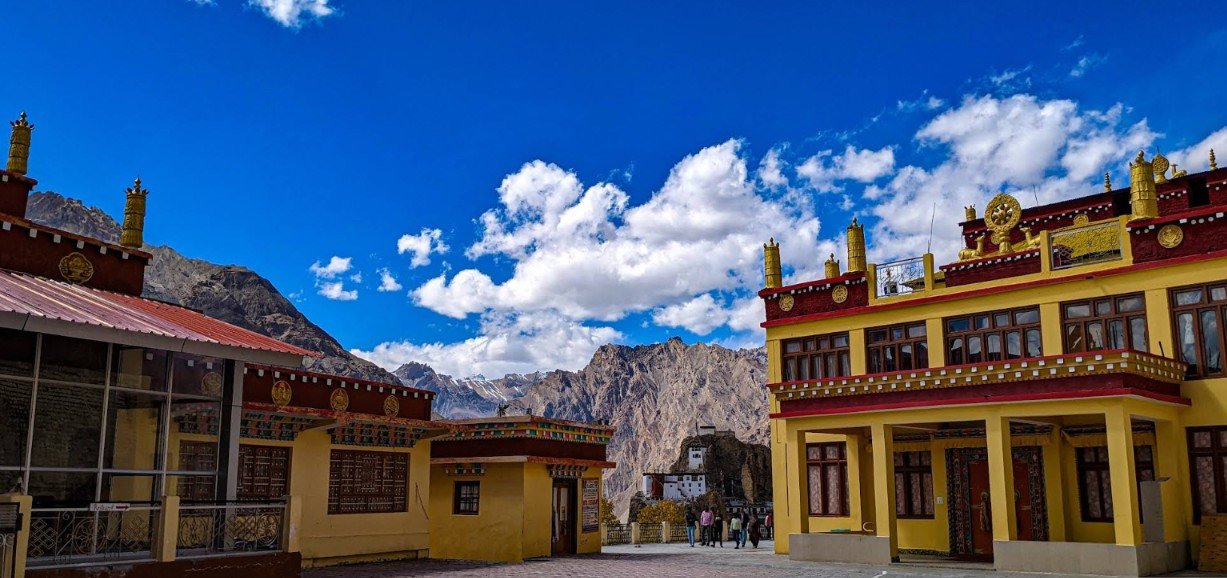
Spiti Valley sits high in the Himalayas in Himachal Pradesh. People call it a cold desert, and when you get there you understand why. The land is dry and brown, the mountains are bare, and the sky is deep blue. Small white villages sit on the hillsides, and old monasteries stand on rocks above them.
It is not a place where you rush from one spot to another. The roads are slow, the air is thin, and the views make you stop again and again. If you are planning a trip, here are the best things to do in Spiti, in simple order.
Visit the Monasteries
Monasteries are the heart of Spiti. Buddhism has been part of life here for more than a thousand years, and almost every village has a gompa.
Key Monastery
Key (also written Kee) is the biggest and most famous monastery in the valley. It stands on top of a hill near Kaza and looks like a cluster of white boxes stacked on each other. Around 300 monks live and study here. Inside, you will see old paintings, books and masks. If you reach in the morning, you may hear the monks praying, which is something you will not forget.
Tabo Monastery
Tabo is more than 1,000 years old and is one of the oldest monasteries in India. The walls inside have very old paintings and clay statues. Photography is not allowed inside, so just spend some quiet time looking around. Tabo is usually the first big stop if you enter Spiti from the Shimla side.
Dhankar Monastery
Dhankar is built on the edge of a sharp cliff. From the top, you can see where the Spiti and Pin rivers meet. A short walk from the monastery takes you to Dhankar Lake. The walk is not hard, but go slowly because the height can make you breathe faster.
Komic and Hikkim
Komic is one of the highest villages in the world that you can reach by road. Hikkim is nearby and is known for its post office, where you can post a card to your friends and family back home. Many travellers like this small, fun stop.
A few simple rules at monasteries: take off your shoes where asked, speak softly, and ask before taking photos of monks.
Walk Through the Villages
The villages are where you really see how people live here. Life is simple and tough, and people are very friendly.
Langza
Langza is famous for the huge Buddha statue that faces the mountain. The village is also known for fossils. People say that this land was under the sea millions of years ago, and you can still find small shell fossils on the ground. Sit here for a while with a cup of tea and look at the Chau Chau Kang Nilda peak.
Hikkim and Komic
Both are close to Langza, so you can see all three in one day. The houses are made of mud and stone, and the roofs are flat. You will often see kids playing outside and old women spinning wool.
Kibber
Kibber is at about 4,200 metres, and it is one of the high villages with people living there all year. It has a small wildlife sanctuary nearby. If you are lucky, you may see ibex or blue sheep on the slopes. In winter, snow leopards are also seen in this area, but you need luck and a local guide for that.
Kaza
Kaza is the main town of Spiti. You will find hotels, shops, ATMs, fuel and cafes here. Most people use Kaza as a base and go to nearby places from here. The old and new parts of the town are on two sides, and a walk in the market is a good way to spend an evening.
Pin Valley
Pin Valley is green compared to the rest of Spiti. It has a national park and nice views. The village of Mud is the last village here and is the starting point of the Pin Parvati Pass trek. Even if you do not trek, the drive is worth it.
Go to the Lakes
Lakes in Spiti look like pieces of sky that fell on the ground.
Chandratal Lake
Chandratal means Moon Lake, and it is shaped like a half moon. It is at about 4,300 metres. The colour of the water changes during the day, from blue to green to grey. You cannot drive right to the lake. You park at the end of the road and walk about 2 km. There is no hotel at the lake, only camps nearby. The road to Chandratal is open only in summer, usually from June to September, so plan your dates well.
Dhankar Lake
This is a small lake above Dhankar village. The walk takes about 45 minutes to one hour. It is not very big, but the setting is peaceful, and the walk gives you good views of the valley.
Suraj Tal and Chandra Tal Area
If you come from the Manali side, you cross Baralacha La and pass near Suraj Tal. It is a big, clear lake right next to the road. Stop for ten minutes and take it in.
Other Things You Should Not Miss
Kunzum Pass
Kunzum La is at about 4,500 metres and connects Lahaul to Spiti. There is a small temple at the top, and drivers usually go around it once for a safe journey. The view from here is huge.
Pin Valley National Park
This park is home to rare animals and birds. You do not need to do anything special here. Just walk, look and breathe.
Stargazing
Spiti has almost no light pollution. On a clear night, the sky is full of stars. You can even see the Milky Way with your eyes. Bring a warm jacket, because nights are very cold even in summer.
Local food
Try thukpa, momos, butter tea and siddu. Siddu is a steamed bread filled with potato or paneer, and it is quite filling. Small cafes in Kaza and Langza serve good home-style food.
Photography
Early morning and late afternoon are best for pictures. The light is soft and the mountains turn golden.
Simple Tips Before You Go
Take it slow. Most places in Spiti are above 3,500 metres. Do not plan a heavy day when you arrive. Rest one day, drink water and let your body get used to the height.
Carry cash. Network is weak and ATMs sometimes do not work. Keep enough cash from Kaza.
Fuel up. There is only one petrol pump in Kaza. Fill your tank whenever you can.
Pack warm. Even in summer, nights can go below zero. Carry layers, a good jacket, gloves, sunglasses and sunscreen. The sun is strong at this height.
Check the road. Roads can close because of rain or snow. Check the latest road status before you leave.
Respect local life. Do not litter. Plastic does not break down easily in this dry land. Carry your trash back with you.
How Many Days Do You Need?
For a basic trip, 7 to 8 days is good. This gives you time to see the main monasteries, a few villages and one or two lakes without feeling rushed. If you want to include Chandratal, Pin Valley and Kibber properly, 9 or 10 days is better.
If you do not want to handle driving, permits, stays and the height problems on your own, a guided trip makes things easier. You can check our Spiti Valley tour packages that cover the main places in a simple, well-planned way with local drivers and stays sorted.
Final Words
Spiti Valley is not about doing a lot. It is about slowing down. You visit a monastery in the morning, sit in a village at noon, and watch the stars at night. There are no big malls or crowded cafes, only mountains, silence and kind people.
Go with an open mind, give your body time, and respect the land and the people. If you do that, Spiti will stay with you for a long time