Uttarakhand is not just another mountain state. People call it Dev Bhoomi for its best spiritual yatras, the land of gods, because almost every valley, river, glacier, and mountain here carries a spiritual story. You can feel it while driving through the narrow roads of Garhwal and Kumaon. Temples appear on cliffs, bells hang beside rivers, and somewhere in the distance somebody is always chanting prayers. Even people who come here for trekking often leave feeling connected to something deeper.
What makes spiritual yatras in Uttarakhand special is the effort behind them. You walk for hours through forests, rocky trails, rain, snow, and thin mountain air. The journey itself becomes part of the prayer. By the time you reach the temple or sacred lake, your mind slows down naturally. Mountains have a way of doing that to people.
Some yatras are famous across India and receive lakhs of pilgrims every year. Others stay hidden in remote valleys where silence feels louder than sound. But every one of them leaves something behind in your memory. Here are some of the best spiritual yatras in Uttarakhand that every mountain lover and spiritual traveler should experience at least once.
1. Madmaheshwar yatra
Madmaheshwar is one of the most peaceful spiritual journeys in Uttarakhand. The temple is dedicated to Lord Shiva and is part of the Panch Kedar circuit. Unlike Kedarnath, this place still feels untouched by heavy tourism. The trek begins from Gaundhar village near Ukhimath and passes through dense forests, old wooden houses, waterfalls, and green meadows. During monsoon and post-monsoon months, the entire valley turns bright green while clouds move slowly between mountain ridges.
The temple sits at around 11,500 ft, surrounded by massive Himalayan peaks. The energy here feels quiet and personal. Pilgrims wake up before sunrise and walk further uphill toward Budha Madmaheshwar, a small shrine located above the main temple. From there, Chaukhamba peak looks unbelievably close during sunrise. The orange light hitting the snow-covered mountains creates one of the best views in the Garhwal Himalayas.
According to mythology, the navel of Lord Shiva appeared here after he disappeared from the Pandavas. Whether someone comes for religious reasons or simply to experience the Himalayas, Madmaheshwar leaves a deep impression. The combination of trekking, mythology, isolation, and mountain beauty creates something difficult to explain properly in words.
2. Kedarnath Temple trek
Kedarnath is probably the most famous spiritual yatra in Uttarakhand and one of the holiest Shiva temples in India. The temple stands at an altitude of around 11,700 ft beside the Mandakini river with giant snow peaks surrounding the valley. Reaching Kedarnath requires a 16 km trek from Gaurikund, and that climb becomes an emotional experience for many pilgrims.
The route stays crowded throughout the yatra season. Elderly devotees walk slowly with sticks in their hands while younger trekkers move faster through the steep sections. Horses, porters, tea stalls, prayer chants, rain showers, helicopter sounds, and cold mountain winds all become part of the journey. Despite the crowd, there are moments on the trail where the mountains suddenly open up and everything feels silent again.
The temple itself carries a powerful presence. Massive stone walls standing against harsh Himalayan weather create a feeling of strength and endurance. The 2013 floods destroyed large sections of the valley, yet the temple survived. Many pilgrims still talk about that survival as something miraculous.
Early morning darshan at Kedarnath feels completely different from daytime. Cold air moves through the valley while temple bells echo against the mountains. Even people who are not deeply religious often describe feeling emotional after reaching the temple. The journey demands physical effort, and maybe that effort is what makes the experience feel meaningful.
3. Gaumukh Tapovan trek
Gaumukh Tapovan trek is one of the most spiritually intense treks in Uttarakhand. The route begins from Gangotri and follows the Bhagirathi river toward the Gaumukh glacier, which is considered the origin of the holy Ganga river. This trek combines spirituality, adventure, and raw Himalayan landscapes in a way very few journeys can.
The trail gradually leaves forests behind and enters a rough glacial terrain filled with rocks, moraine sections, and icy winds. Bhojbasa becomes the final resting point before reaching Gaumukh. Beyond this point, the mountains start dominating everything around you. The glacier itself looks powerful and unpredictable, with huge walls of ice continuously breaking and melting into the river below.
But the real magic begins after climbing toward Tapovan. The ascent is difficult and physically demanding because of loose rocks and altitude gain. Once trekkers reach the meadow, the entire landscape changes suddenly. Wide grasslands appear beneath towering Himalayan peaks like Shivling and Meru.
Mount Shivling especially feels almost unreal when seen from Tapovan. Its sharp shape rises dramatically above the valley, and many sadhus consider this region highly sacred for meditation. Even today, some monks spend months living in caves around Tapovan despite extreme weather conditions.
There is something deeply humbling about this place. Human life feels very small here, surrounded by glaciers, silence, and giant mountains that have existed for thousands of years.
4. Tungnath and Chandrashila trek
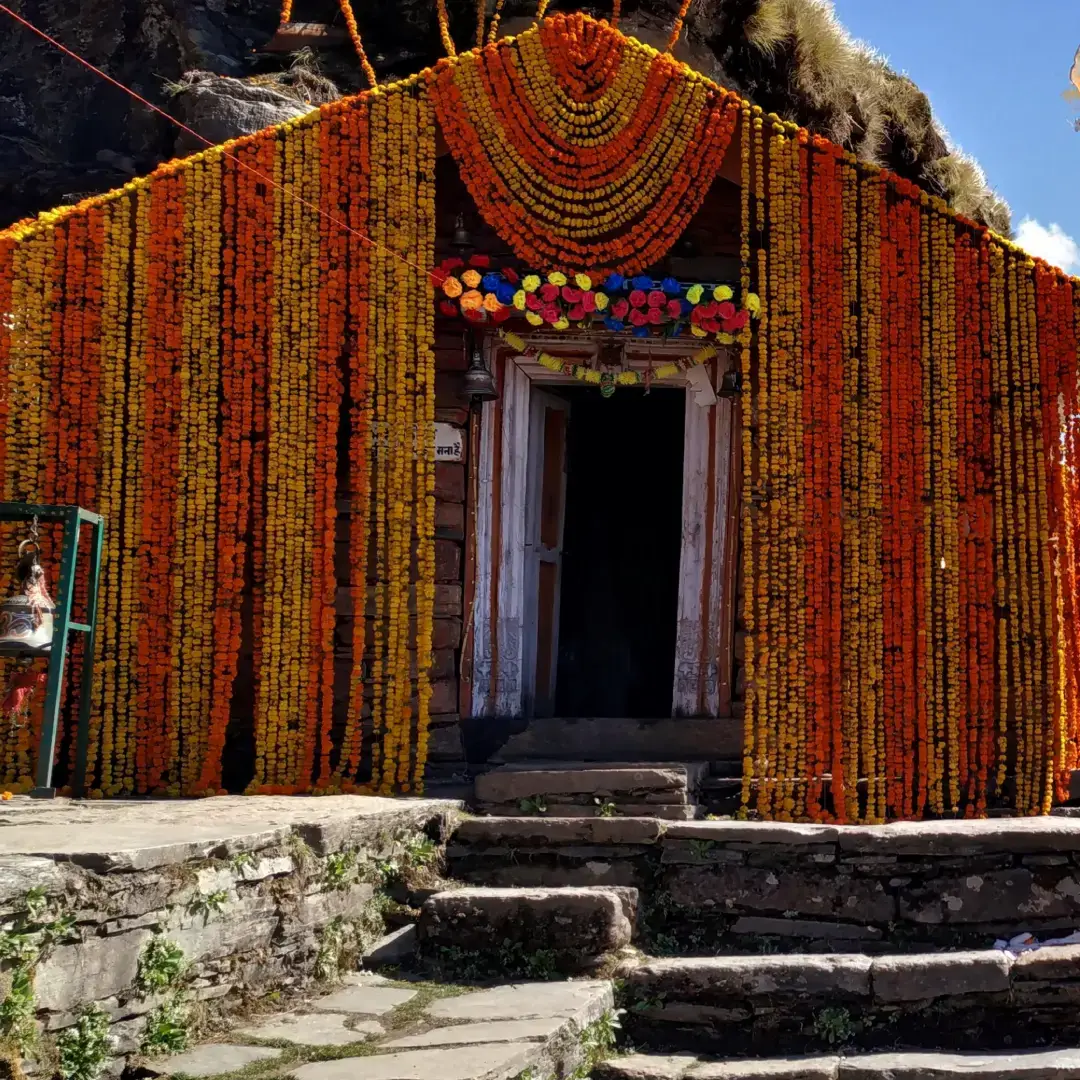
Tungnath is the highest Shiva temple in the world and one of the most beautiful short treks in Uttarakhand. The route starts from Chopta, often called the mini Switzerland of India because of its green meadows and panoramic Himalayan views.
The trek itself is around 5 km long and suitable for beginners, but the scenery makes it unforgettable. Stone-paved trails pass through grassy slopes and rhododendron forests that bloom beautifully during spring. During winter, the entire route gets covered in snow, turning the trek into a completely different experience.
The temple architecture is simple yet ancient. Surrounded by clouds and mountain peaks, Tungnath feels peaceful throughout the day. Many trekkers continue another 1.5 km toward Chandrashila summit after visiting the temple.
Chandrashila is famous for sunrise views. Trekkers usually begin walking before dawn with headlamps and reach the summit just before sunrise. Slowly the sky changes color while peaks like Nanda Devi, Chaukhamba, Trishul, and Kedarnath start glowing under golden light.
Standing there in freezing wind while the entire Himalayan range lights up feels spiritual even without entering a temple.
5. Badrinath Temple yatra
Badrinath is one of the Char Dham pilgrimage sites and among the most important spiritual destinations for Hindus. Located beside the Alaknanda river in Chamoli district, the temple is dedicated to Lord Vishnu and attracts pilgrims from across the country every year.
Unlike Kedarnath, Badrinath can be reached directly by road, but the journey through mountain valleys still feels dramatic. Rivers flow beside steep cliffs while snow-covered peaks remain visible throughout the route.
The temple itself stands against the backdrop of Neelkanth peak, which looks especially beautiful during sunrise. Pilgrims often take a dip in the Tapt Kund hot spring before entering the temple for darshan.
Nearby attractions add even more spiritual depth to the region. Mana Village, known as the last Indian village before Tibet, sits only a few kilometers away. Places like Vyas Gufa, Bhim Pul, and the Saraswati river are connected with stories from the Mahabharata.
The entire region feels ancient. Mythology and geography blend together naturally here.
6. Hemkund Sahib trek
Hemkund Sahib is one of the most respected Sikh pilgrimage sites in India and also one of the toughest spiritual treks in Uttarakhand because of the altitude. The trek begins from Ghangaria and climbs steeply toward a glacial lake surrounded by mountains at more than 15,000 ft.
The climb is physically exhausting. Oxygen levels drop quickly, and many pilgrims stop repeatedly to catch their breath. Yet people of all ages continue walking upward with incredible determination. Elderly devotees climbing slowly while chanting prayers create a deeply emotional atmosphere on the trail.
The gurudwara beside the lake looks peaceful against the harsh mountain landscape. Clouds drift slowly over the water while prayers echo through the valley. During early mornings, the reflection of surrounding mountains in the lake creates an unforgettable sight.
Many travelers combine Hemkund Sahib with the nearby Valley of Flowers trek. One route gives you colorful alpine flowers while the other gives you silence, devotion, and cold mountain air.
7. Adi Kailash yatra
Adi Kailash is among the most remote and fascinating spiritual journeys in Uttarakhand. Located near the Indo-Tibet border in Kumaon region, this yatra takes travelers through rough mountain roads, isolated villages, waterfalls, and dramatic Himalayan landscapes.
The mountain resembles the sacred Mount Kailash in Tibet, which is why pilgrims deeply respect this place. Reaching Adi Kailash takes patience because weather and landslides often affect road conditions. Network signals disappear frequently, and modern distractions slowly fade away during the journey.
That isolation becomes part of the spiritual experience.
The region around Adi Kailash feels raw and untouched compared to more commercial pilgrimage routes. Villages remain deeply connected to traditional mountain culture, and the landscapes feel enormous and empty in the best possible way.
For many travelers, Adi Kailash becomes less about religion and more about disconnecting from noise and reconnecting with simplicity.