Winter changes the Himalayas completely. Green meadows turn white, forest trails get covered with snow, lakes can freeze, and the mountains look sharper against the clear winter sky.
For snow lovers, this is one of the best times to explore the Indian Himalayas. But not every high-altitude trek works well in winter. Heavy snowfall can close routes, road conditions can change, and some trails require more experience than they appear to on Instagram.
So, if you are planning a winter adventure for the 2026-27 season, choosing the right trek matters.
In this guide, we have listed some of the best winter treks in India for snow lovers, with a focus on routes that are known for winter conditions, snow-covered landscapes, and genuine trekking experiences.
Best Winter Treks in India for Snow Lovers
Here are some of the most popular and suitable options to consider:
- Kedarkantha Trek, Uttarakhand
- Brahmatal Trek, Uttarakhand
- Dayara Bugyal Trek, Uttarakhand
- Chopta–Chandrashila Trek, Uttarakhand
- Kuari Pass Trek, Uttarakhand
- Gorson Bugyal Trek, Uttarakhand
- Pangarchulla Trek, Uttarakhand
Most of these treks are in Uttarakhand because the state has a strong network of winter trekking routes. Uttarakhand Tourism itself lists several winter trekking routes, including Kedarkantha, Dayara Bugyal, Brahmatal and Chopta–Chandrashila.
1. Kedarkantha Trek – A Classic Winter Snow Trek
If you search for the best winter trek in India, Kedarkantha trek package will usually appear near the top of the list. And there is a good reason for that.
Located in Uttarakhand’s Uttarkashi district, the trek starts from the Sankri region and takes you through forests, Juda Ka Talab, snow-covered campsites and finally to Kedarkantha Peak.
According to Uttarakhand Tourism, the trek covers approximately 20 km and reaches around 3,800 metres. The department describes it as an easy-to-moderate trek suitable for beginners, while winter brings snow-covered forests and trails.
One of the highlights is Juda Ka Talab. In winter, the lake can freeze and the surrounding landscape gets covered in snow. The final summit section gives wide Himalayan views, making the effort worthwhile.
Why choose Kedarkantha?
- Good choice for first-time winter trekkers
- Snow-covered forests and campsites
- Summit experience at around 3,800 metres
- Famous winter trekking route
- Beautiful views of surrounding Himalayan peaks
Best for: Beginners who want their first proper snow trek.
2. Brahmatal Trek – Snow, Forests and a High-Altitude Lake
The Brahmatal Trek is another strong choice for anyone who wants a classic Himalayan winter experience.
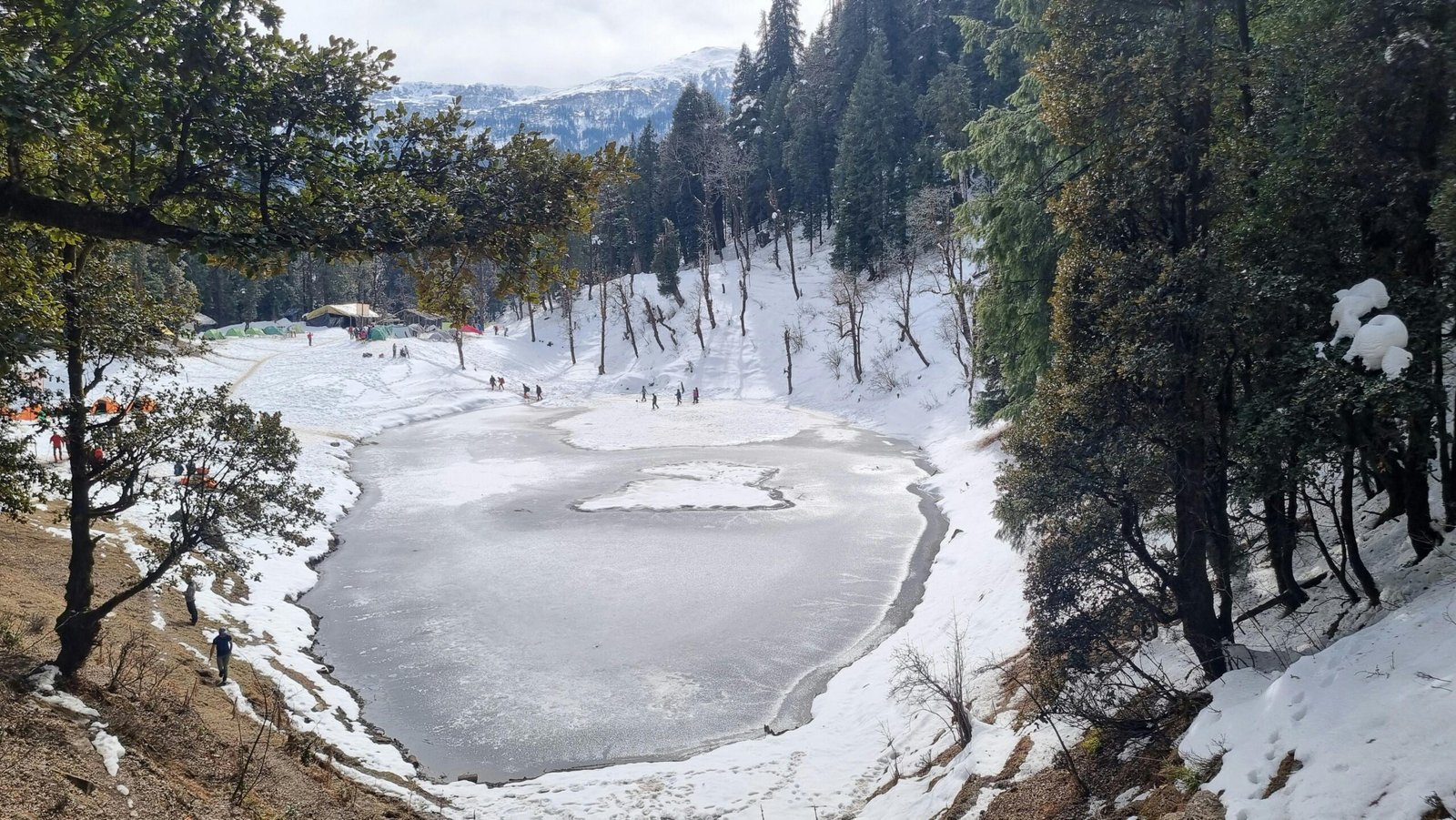
The trek starts from Lohajung in Chamoli district and passes through oak and rhododendron forests before reaching the snow-covered high-altitude landscape around Brahmatal.
Uttarakhand Tourism lists Brahmatal at an altitude of about 3,734 metres, with a trekking distance of around 21 km. It also describes the route as an easy trek and highlights its forests, alpine lakes, snow-covered meadows and mountain views.
The trail also offers views of peaks such as Trishul and Nanda Ghunti.
And then there is Brahmatal trek package itself. A frozen or snow-covered lake surrounded by mountains is exactly the kind of winter scene most trekkers are looking for.
Why choose Brahmatal?
- Excellent winter snow experience
- High-altitude lake
- Oak and rhododendron forests
- Mountain views
- Suitable for beginners with basic preparation
Best for: Trekkers who want snow plus a beautiful alpine lake.
3. Dayara Bugyal Trek – Snow-Covered Meadows
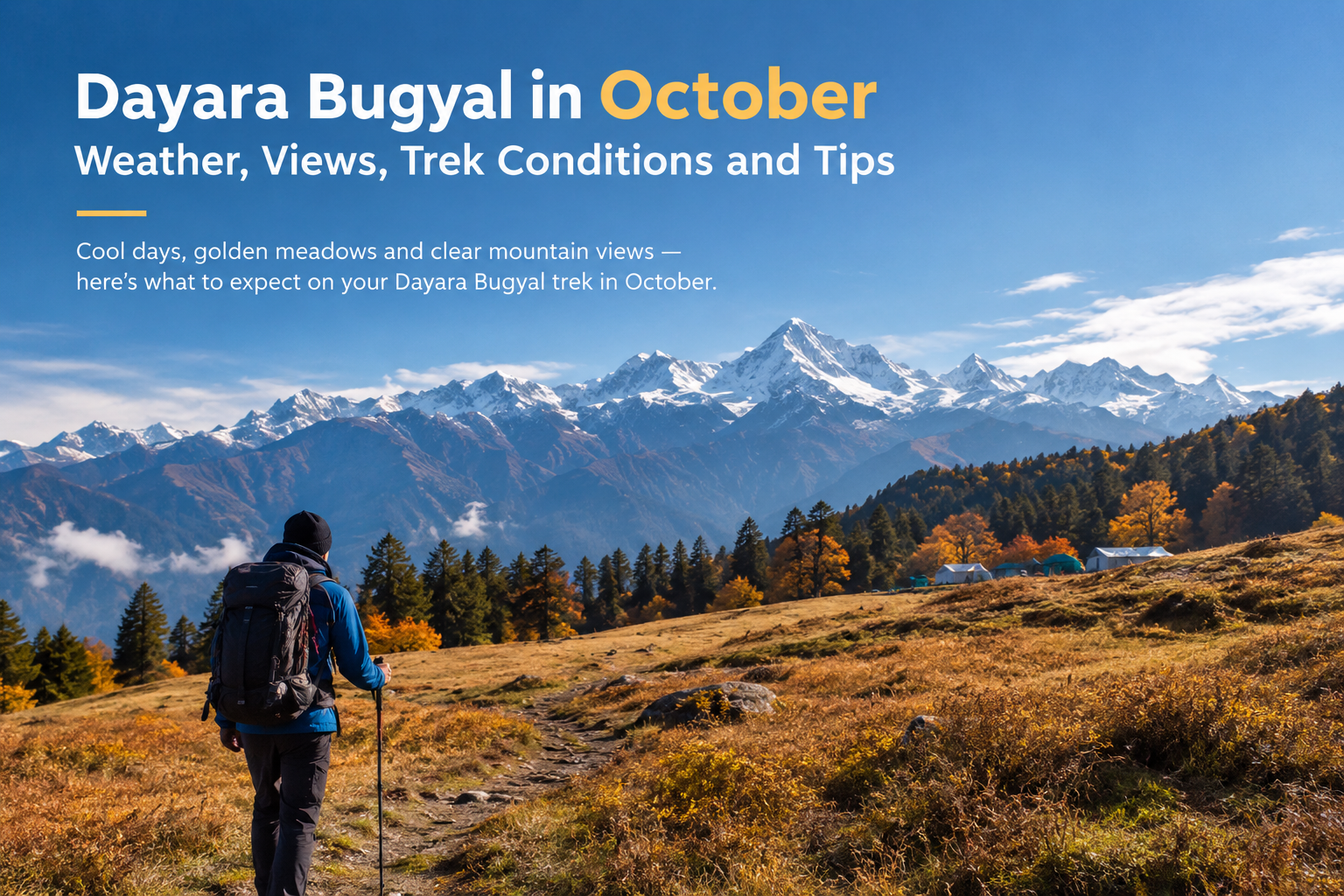
Dayara Bugyal is one of Uttarakhand’s famous high-altitude meadows. During winter, the landscape changes dramatically.
Instead of the green meadow seen in warmer months, you can find a wide white landscape covered with snow.
Uttarakhand Tourism’s winter itinerary describes Dayara Bugyal as a snow-covered expanse and highlights views of peaks including Bandarpoonch, Kala Nag and the Gangotri range.
The official tourism information also notes that Dayara receives heavy snow from December to March and that its gentle slopes make the area suitable for skiing activities.
The trek can be approached from villages such as Raithal and Barsu. The Raithal route is particularly useful for trekkers planning their winter itinerary from Dehradun.
Why choose Dayara Bugyal?
- Large snow-covered meadows
- Beginner-friendly route
- Beautiful Himalayan views
- Excellent winter landscape
- Good option for photographers
Best for: People who want open snowfields instead of only forest trails.
4. Chopta–Chandrashila Trek – Snow With Himalayan Views
The Chopta–Chandrashila route is another popular winter option in Uttarakhand.
The trail generally takes you towards Tungnath and then Chandrashila. In winter, the route can become heavily covered in snow.
Uttarakhand Tourism specifically states that the Chopta-Chandrashila route is covered in snow during winter and recommends the area around December and January for the winter experience.
The official trekking itinerary also notes that the trail from Tungnath to Chandrashila can be completely buried under snow during winter, with a steep climb towards the summit.
That last point is important.
This trek may look easy in photographs, but snow can make the same trail considerably harder. Proper shoes, warm layers and good grip become very important.
Why choose Chopta-Chandrashila?
- Snow-covered trail
- Tungnath Temple on the route
- Excellent Himalayan views
- Good winter photography opportunities
- Shorter trekking option compared with many high-altitude routes
Best for: Trekkers who want snow, mountains and a spiritual element in the same trip.
5. Kuari Pass Trek – A Snowy Himalayan Trail
Kuari Pass, also known as Lord Curzon’s Trail, is a more challenging option on this list.
The trek lies in Chamoli district and reaches approximately 3,815 metres. Uttarakhand Tourism lists the trek at around 20 km with a moderate difficulty level. The route passes through forests, alpine meadows, villages and snow-covered terrain.
One of the major attractions is the mountain scenery.
Kuari Pass is known for broad views of the Himalayan ranges, making it a good option for experienced trekkers who want more than just a beginner-level snow walk.
Why choose Kuari Pass?
- Moderate trekking experience
- Snow-covered Himalayan terrain
- Alpine meadows and forests
- Wide mountain views
- More adventurous than beginner winter routes
Best for: Trekkers who already have some Himalayan trekking experience.
6. Gorson Bugyal Trek – A Short Snow Experience Near Auli
If you want to combine snow with the popular winter destination of Auli, Gorson Bugyal is worth considering.
Gorson Bugyal sits close to Auli and becomes a snow-covered landscape during winter. Uttarakhand Tourism describes it as a beginner-friendly meadow with views of peaks such as Nanda Devi, Trishul and Dron Parvat.
The route from Auli to Gorson passes through oak and conifer forests before reaching the meadow.
Auli itself is also one of India’s major skiing destinations. Uttarakhand Tourism recommends January to March for skiing activities and notes that Gorson Bugyal is around 3 km from Auli.
Why choose Gorson Bugyal?
- Shorter trekking experience
- Easy access from Auli
- Snow-covered meadow
- Great views
- Can be combined with an Auli winter trip
Best for: Families, beginners and travellers who want a shorter snow experience.
7. Pangarchulla Trek – For Experienced Snow Trekkers
Pangarchulla is not the trek I would recommend to someone who has never trekked before.
This route reaches around 4,600 metres and involves steep sections and long trekking days. Uttarakhand Tourism categorises it as a challenging high-altitude trek and recommends March and April, particularly because of its snow conditions and terrain.
That makes Pangarchulla different from Kedarkantha or Brahmatal.
If your main goal is simply to see snow, choose a beginner-friendly trek. But if you already have trekking experience and want a demanding high-altitude adventure with snow, Pangarchulla can be a serious option.
Why choose Pangarchulla?
- High-altitude adventure
- Snow-covered terrain
- Big Himalayan views
- Challenging climbs
- Better suited to experienced trekkers
Best for: Experienced trekkers looking for a harder winter-to-spring adventure.
Best Months for Winter Treks in India
The exact snow conditions can change from year to year. There is no honest way to guarantee that a particular campsite will have fresh snow on a specific date months in advance.
Still, for many Uttarakhand winter treks, December to March is the main period to consider.
Dayara Bugyal, for example, is reported by Uttarakhand Tourism to receive heavy snow from December to March.
For Auli and Gorson Bugyal, January to March is a strong winter period, especially if skiing and snow activities are part of your plan.
Kedarkantha and Brahmatal are also widely recognised as winter trekking routes, but actual snowfall depends on weather conditions in that particular season.
So don’t book a trek based only on a beautiful photograph from last year. Mountains don’t follow Instagram schedules.
Which Winter Trek Is Best for Beginners?
If this is your first snow trek, you don’t necessarily need the highest mountain or the most difficult trail.
A sensible shortlist would be:
Kedarkantha: Best for a first summit-style winter trek.
Brahmatal: Best for snow, forests and an alpine lake.
Dayara Bugyal: Best for wide open snow-covered meadows.
Chopta–Chandrashila: Best for snow with mountain views and a temple visit.
Gorson Bugyal: Best for a shorter and easier snow experience.
Your final choice should depend on your fitness, previous trekking experience, available days and current trail conditions.
What Makes a Good Winter Snow Trek?
A good winter trek isn’t only about how much snow you get.
Look at the complete experience.
You need a route with reasonable access, proper camping or accommodation arrangements, reliable local support and conditions suitable for your experience level.
Altitude also matters. A trek at 3,500–4,000 metres can feel very different from a weekend walk in the hills.
And snow can make an easy trail harder. Walking on fresh snow takes more energy, while icy sections require extra care.
Essential Gear for Winter Treks
For a winter trek, your clothing should focus on warmth and staying dry.
Carry proper trekking shoes with good grip, thermal base layers, a fleece layer, a warm insulated jacket, waterproof outerwear, woollen socks, gloves and a warm cap.
A headlamp, water bottle, sunglasses, sunscreen, personal medicines and basic emergency supplies should also be part of your backpack.
Don’t underestimate the cold at night.
A sunny afternoon can feel pleasant, while temperatures can drop sharply after sunset. Your trek operator should also provide or advise you about suitable sleeping gear and other technical equipment required for the route.
Safety Tips for Snow Treks
Winter trekking needs more planning than a normal summer trek.
Check the weather and trail conditions before departure. Ask your trek operator about recent snowfall, road access and whether the route remains open.
Don’t rush on icy sections.
Keep your pace comfortable, drink enough water and tell your trek leader if you feel unwell.
Also, don’t treat altitude casually. Headache, unusual tiredness, dizziness or other symptoms can require attention. Your trekking team should have a clear plan for dealing with altitude-related problems.
Most importantly, respect local instructions and forest or protected-area regulations.
Final Thoughts
The best winter treks in India for snow lovers in 2026–27 are not necessarily the routes with the highest altitude.
For beginners, Kedarkantha, Brahmatal, Dayara Bugyal, Chopta–Chandrashila and Gorson Bugyal offer strong options for experiencing the winter Himalayas.
For more experienced trekkers, Kuari Pass and Pangarchulla offer tougher terrain and bigger challenges.
And remember one simple rule: snow is beautiful, but mountains demand respect.
Choose your trek according to your experience, prepare properly, check current conditions and travel with a responsible trekking team. If you do that, your winter Himalayan trip can be much more than a collection of snowy photographs. It can become the kind of mountain memory you keep talking about long after your shoes have finally stopped smelling like wet socks.