The Himalayas offer many spiritual journeys, but few feel as rewarding as the Panch Kedar pilgrimages in Uttarakhand. Among these sacred routes, the Rudranath Trek and Madmaheshwar Trek stand out for their unique blend of spirituality, natural beauty, and adventure.
Both treks lead to ancient temples dedicated to Lord Shiva. Both take you through remote Himalayan landscapes. Yet the experience on each trail feels completely different.
So, if you’re planning a Panch Kedar pilgrimage and wondering which trek deserves a place on your itinerary, this guide will help you make the right choice.
Understanding the Spiritual Importance
Before comparing the trekking experience, it helps to understand why these temples matter.
Rudranath and Madmaheshwar are part of the revered Panch Kedar circuit, a group of five Shiva temples located in the Garhwal Himalayas. According to Hindu tradition, these temples are linked to the story of the Pandavas seeking Lord Shiva’s blessings after the Mahabharata war.
In Panch Kedar mythology:
- Kedarnath represents Shiva’s hump.
- Madmaheshwar represents Shiva’s navel.
- Tungnath represents Shiva’s arms.
- Rudranath represents Shiva’s face.
- Kalpeshwar represents Shiva’s matted hair.
For many pilgrims, visiting these temples is not simply a trek. It is a spiritual journey through some of India’s most sacred mountain landscapes.
Quick Comparison: Rudranath Trek vs Madmaheshwar Trek
| Feature | Rudranath Trek | Madmaheshwar Trek |
|---|---|---|
| Temple Altitude | Around 3,550–3,600 m | Around 3,497 m |
| Panch Kedar Significance | Face of Lord Shiva | Navel of Lord Shiva |
| Difficulty Level | Moderate to Challenging | Moderate |
| Trek Distance | Usually 18–22 km one way depending on route | Approximately 16–24 km one way depending on starting point |
| Crowd Level | Very low | Low to moderate |
| Scenic Beauty | Vast meadows, ridges, forests | Forests, villages, alpine meadows |
| Best For | Experienced trekkers and solitude seekers | Pilgrims, beginners, and nature lovers |
| Trek Duration | 4–6 days | 3–5 days |
The Rudranath Trek Experience
A Journey Into the Wild Himalayas
If the Himalayas had a “secret chapter,” Rudranath would probably be it.
Unlike many famous pilgrimage routes, Rudranath remains relatively untouched. The trek passes through dense forests, remote shepherd trails, high-altitude meadows, and long mountain ridges. Many trekkers describe it as one of the most scenic routes in Uttarakhand.
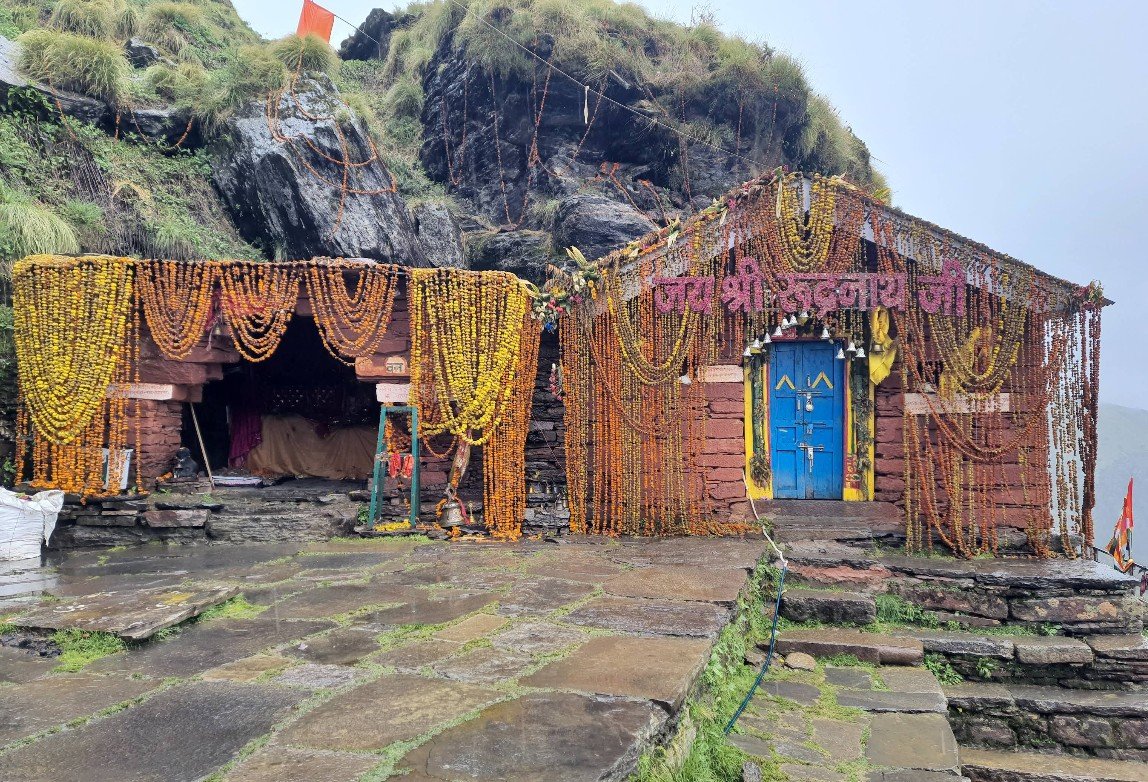
The temple itself sits amidst dramatic mountain surroundings at an altitude of approximately 3,550 meters.
The isolation is part of its charm.
You won’t find large crowds, busy markets, or endless lines. Instead, you’ll hear birds, mountain winds, and perhaps your own thoughts for the first time in months.
Highlights of the Rudranath Trek
Stunning Bugyals
The route passes through famous Himalayan meadows such as Panar Bugyal. During summer, these grasslands transform into a colorful landscape filled with alpine flowers.
Panoramic Himalayan Views
Trekkers can enjoy views of peaks such as Nanda Devi, Trishul, Nanda Ghunti, and Chaukhamba on clear days.
Deep Spiritual Atmosphere
The temple’s remote location creates a powerful sense of peace. Many visitors say Rudranath feels less like a tourist destination and more like a place for reflection.
Challenges of the Rudranath Trek
The beauty comes with effort.
The trail includes steep ascents, longer walking days, and changing weather conditions. Beginners can complete it, but good fitness levels make the experience far more enjoyable.
Think of Rudranath as the mountain equivalent of reading a classic novel. It requires patience, but the reward stays with you for years.
The Madmaheshwar Trek Experience
A Perfect Blend of Pilgrimage and Trekking
Madmaheshwar offers a different kind of Himalayan experience.
The trail begins from Ransi village and gradually climbs through forests, traditional Garhwali settlements, streams, and meadows before reaching the ancient temple dedicated to Lord Shiva. The shrine stands at an altitude of approximately 3,497 meters.
Compared to Rudranath, the route feels more accessible and welcoming.
You still get incredible mountain scenery, but without the same level of physical challenge.
Highlights of the Madmaheshwar Trek
Beautiful Forest Trails
The trek passes through dense oak and rhododendron forests that become particularly beautiful during spring and early summer.
Spectacular Chaukhamba Views
One of the biggest rewards awaits near Budha Madmaheshwar, a short hike above the temple. From here, the Chaukhamba massif appears incredibly close and majestic.
Authentic Village Culture
Unlike some commercial trekking routes, Madmaheshwar still offers genuine interactions with local communities.
Suitable for More Travelers
Many first-time trekkers choose Madmaheshwar because the trail is manageable while still delivering a true Himalayan experience.
Challenges of the Madmaheshwar Trek
Although easier than Rudranath, it should not be underestimated.
The altitude gain remains significant, and some sections involve steady uphill climbing. Proper preparation, hydration, and acclimatization are important.
Which Trek Has Better Scenery?
This is where things get interesting.
Both treks are beautiful, but they showcase different sides of Uttarakhand.
Choose Rudranath If You Love:
- Vast alpine meadows
- Remote mountain landscapes
- Ridge walks
- Wilderness experiences
- Fewer people
Choose Madmaheshwar If You Love:
- Forest trails
- Traditional Himalayan villages
- Water streams and waterfalls
- Dramatic mountain backdrops
- Balanced trekking and pilgrimage experiences
Many experienced trekkers consider Rudranath the more visually diverse route. However, Madmaheshwar often wins when it comes to combining scenery with accessibility.
Which Trek Is More Difficult?
Madmaheshwar is generally considered a moderate trek.
Rudranath is usually rated moderate to challenging because of its longer routes, steeper climbs, and remote terrain.
If you’re new to Himalayan trekking, Madmaheshwar offers a safer introduction.
If you’ve completed a few mountain treks and want something more adventurous, Rudranath may feel more rewarding.
Which Trek Is Better for Pilgrims?
This depends on what you seek from your pilgrimage.
Madmaheshwar Is Better For:
- Families
- Senior pilgrims with trekking experience
- First-time Panch Kedar visitors
- Travelers looking for comfort and spirituality
Rudranath Is Better For:
- Spiritual seekers wanting solitude
- Experienced pilgrims
- Those interested in meditation and reflection
- Travelers who enjoy remote destinations
Both temples hold immense religious significance within the Panch Kedar tradition.
Best Time to Visit
For both treks, the ideal seasons are:
Summer (May to June)
- Pleasant weather
- Clear mountain views
- Open temple access
Post-Monsoon (September to October)
- Green landscapes
- Excellent visibility
- Stable trekking conditions
Most trekking experts recommend avoiding peak monsoon periods due to slippery trails and landslide risks.
Cost Comparison
In general:
- Madmaheshwar tends to be slightly easier and cheaper to organize independently.
- Rudranath often requires more trekking days and additional logistical planning.
However, actual costs depend on transportation, accommodation, guides, and travel season.
Who Should Choose Rudranath?
Choose the Rudranath Trek if:
- You enjoy challenging mountain journeys.
- You prefer less crowded destinations.
- You want one of the most peaceful Panch Kedar experiences.
- Scenic bugyals and ridgeline views excite you.
- Spiritual solitude matters more than convenience.
Rudranath feels like a pilgrimage wrapped inside an adventure.
Who Should Choose Madmaheshwar?
Choose the Madmaheshwar Trek if:
- You’re attempting your first Himalayan pilgrimage trek.
- You want a balanced mix of culture, spirituality, and trekking.
- You enjoy forest landscapes and village life.
- You have limited trekking experience.
- You want breathtaking Himalayan views without an extremely demanding route.
Madmaheshwar feels like the perfect middle ground between devotion and exploration.
Final Verdict: Rudranath vs Madmaheshwar
There is no wrong choice here.
If you want a challenging, remote, and deeply immersive Himalayan experience, Rudranath stands out. The trek rewards those who seek solitude, wilderness, and a stronger physical challenge.
If you prefer a more accessible pilgrimage with spectacular scenery, cultural experiences, and moderate trekking difficulty, Madmaheshwar is the better option.
For many Panch Kedar devotees, the ultimate answer is simple: visit both.
After all, comparing Rudranath and Madmaheshwar is a bit like comparing sunrise and sunset. One may suit your journey better today, but both leave a lasting impression on the soul.